Best Website Builders for Small Businesses in 2026
Choosing the best website builder depends on what you are building. Here is how Webflow, Softr, Glide and other platforms compare for small businesses.
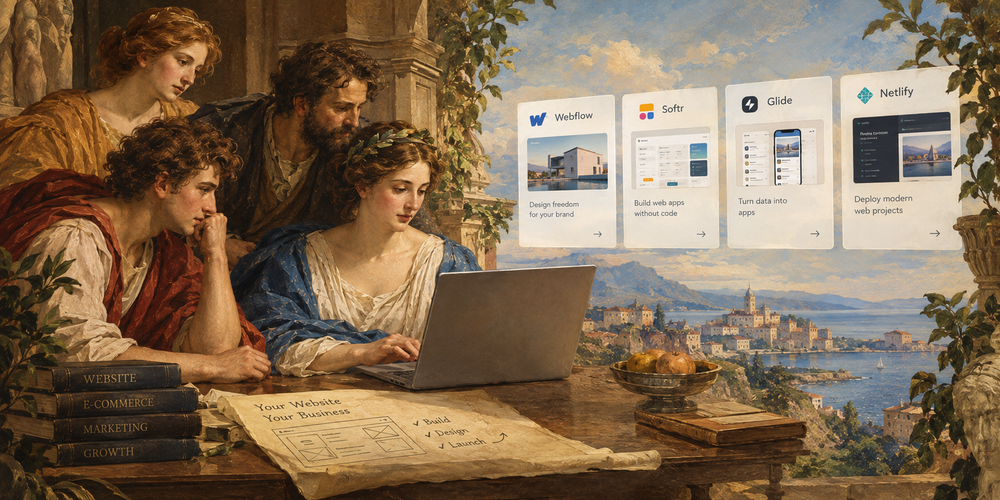
You do not need to be a developer to launch a professional website anymore. The harder part is choosing the right website builder. There are dozens of platforms that promise to make website creation easy, but they are built for very different types of users.
A local business needs something different from a SaaS company. An online creator may care more about selling digital products, while a developer may want complete control over the frontend and deployment process. The best website builder is therefore the one that matches the job rather than the one with the longest feature list.
Webflow is a strong choice for businesses that want a polished marketing website with more design control than typical drag-and-drop builders provide. It is particularly attractive to designers, agencies and companies that care about the details of their website. Read our full Webflow review
Softr is aimed at people who want to build websites and simple web applications without writing everything from scratch. It can be useful for internal tools, client portals, directories and database-driven projects where development time matters more than complete technical control. Read our full Softr review
Glide is another no-code option, but its strength is building applications and business tools from structured data. It is a good fit when the goal is not simply to publish a website but to turn information into something people can interact with. Read our full Glide review
For developers, Netlify solves a different problem. It is focused on deploying and hosting modern web projects rather than replacing the development process with a visual editor. If you already work with frameworks such as Vue, React or static site generators, that distinction matters. Read our full Netlify review
The first question to ask is not which website builder has the best templates. Ask what you need the website to do six months from now. A simple company site may only need pages, forms and SEO. A growing business might need a CMS, integrations, ecommerce or customer accounts.
It is also worth thinking about how much control you want. No-code platforms can dramatically reduce the time needed to launch, but developers and designers may eventually run into limitations. On the other hand, a fully custom website gives you more flexibility but requires more time and technical expertise.
For most small businesses, the best approach is to choose the simplest platform that can comfortably handle the next stage of growth. There is little value in paying for enterprise-level functionality when all you need is a fast, professional website.
Not sure what kind of tool you need? Browse our Web Development category or explore our Productivity tools.