Mailchimp Is Getting Expensive — Here Are the Best Alternatives Worth Switching To
Mailchimp pricing has pushed many teams to look elsewhere. We compared the top alternatives by features, pricing and ease of migration.
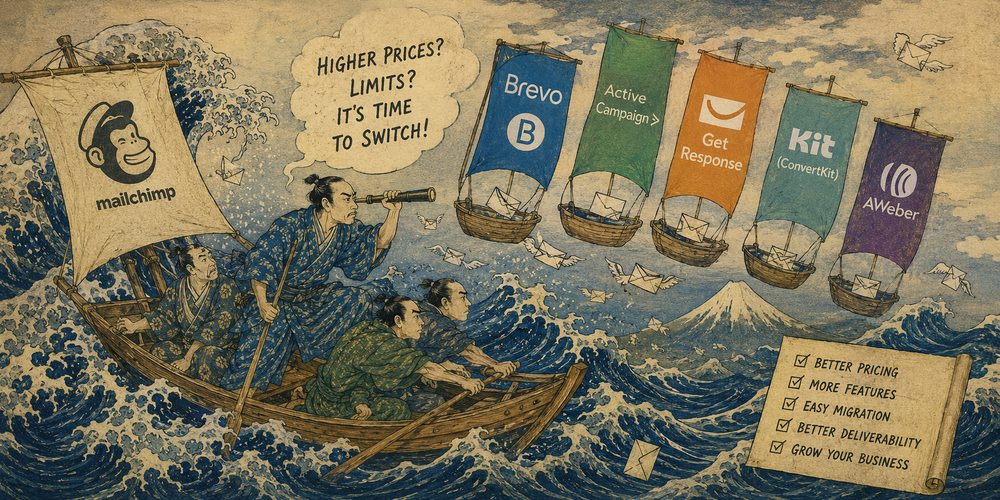
Mailchimp changed its pricing model several times over the past few years, and many small businesses now pay significantly more for the same number of contacts. If you have been feeling the squeeze, you are not alone — thousands of teams are actively evaluating alternatives right now.
The good news is that the email marketing landscape in 2026 is more competitive than ever. Several platforms now match or exceed Mailchimp's feature set at a fraction of the cost. Some even offer generous free tiers that cover the needs of growing businesses without charging per contact.
Brevo (formerly Sendinblue) charges by emails sent rather than contacts stored, which makes it dramatically cheaper for large lists with low send frequency. Their free plan includes 300 emails per day with no contact limit. Automation, SMS marketing and a built-in CRM come standard. Read our full Brevo review
ActiveCampaign is the strongest option if automation is your priority. Its visual workflow builder handles complex multi-step sequences, conditional logic and lead scoring that would require expensive add-ons in Mailchimp. Pricing starts higher but the depth of automation justifies it for teams serious about nurturing. Read our full ActiveCampaign review
GetResponse combines email marketing with landing pages, webinars and conversion funnels in a single platform. If you currently use Mailchimp plus two or three other tools for these functions, GetResponse can consolidate your stack and reduce total spend. Read our full GetResponse review
ConvertKit (now Kit) is purpose-built for creators, bloggers and newsletter writers. The interface is intentionally simple — no drag-and-drop complexity, just clean text-based emails that convert. Tag-based segmentation replaces traditional lists, making it easy to send targeted content without managing multiple audiences. Read our full Kit review
Drip is built specifically for e-commerce brands running Shopify or WooCommerce stores. Revenue attribution ties every email to actual purchases, and customer lifecycle automations trigger based on purchase behavior rather than arbitrary time delays. If your business sells products online, Drip turns email into a direct revenue driver. Read our full Drip review
AWeber has been around since 1998 and remains one of the most reliable options for small businesses. Deliverability rates are consistently above industry average, customer support is responsive, and the 30-day free trial lets you test everything risk-free. Read our full AWeber review
Moosend delivers a feature set comparable to Mailchimp at roughly half the price. Drag-and-drop editor, automation workflows, landing pages and a generous free plan for up to 1,000 subscribers make it an excellent budget pick. Paid plans start around $9/month with no hidden fees. Read our full Moosend review
Campaign Monitor is designed for agencies and creative teams managing multiple client accounts. White-label dashboards, client approval workflows and a professional template library let you deliver branded email campaigns without exposing third-party tools. If you manage email for clients, Campaign Monitor streamlines the entire workflow. Read our full Campaign Monitor review
When choosing a replacement, consider three things: migration effort (most platforms offer free migration assistance), pricing at your current list size plus 12 months of growth, and whether the platform covers other tools you currently pay for separately. Switching email providers is a one-time pain that pays dividends every month after.
For a detailed side-by-side comparison of all eight alternatives including pricing tables, feature matrices and migration guides, visit our dedicated Mailchimp alternatives page.